Fastener catalogs can be dense with near-identical-sounding product names. Here's a plain-language reference to a few of the most commonly sourced types.
Hex Nuts vs Nylon Lock Nuts vs Lock Nuts
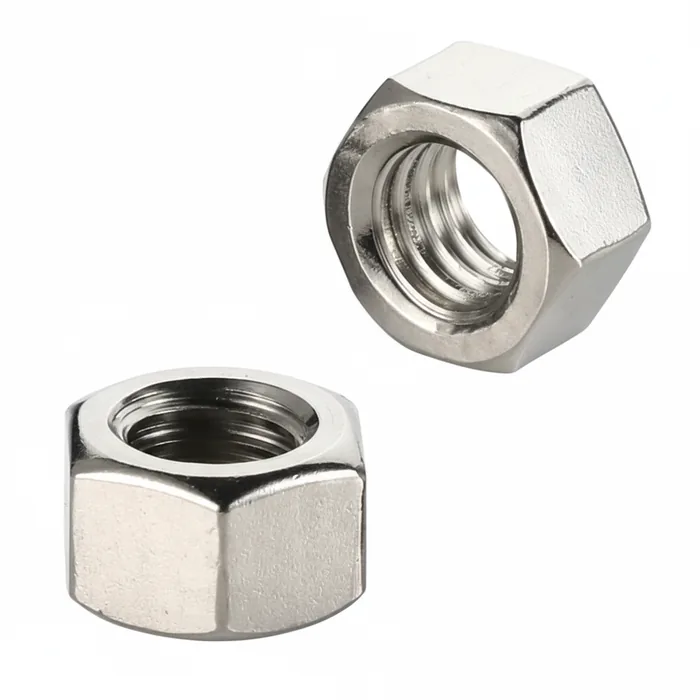
A standard Hex Nut (DIN 934, ISO 4032, ASME B18.2.2) is used for general assembly. A Nylon Lock Nut adds a nylon insert to resist loosening under vibration (DIN 985, ISO 7040, ASME B18.16.3), while a metal Lock Nut achieves the same result with an all-metal locking mechanism (DIN 980, ISO 7719, ASME B18.16.3) - useful where nylon inserts aren't suitable, such as higher-temperature environments.
Washers
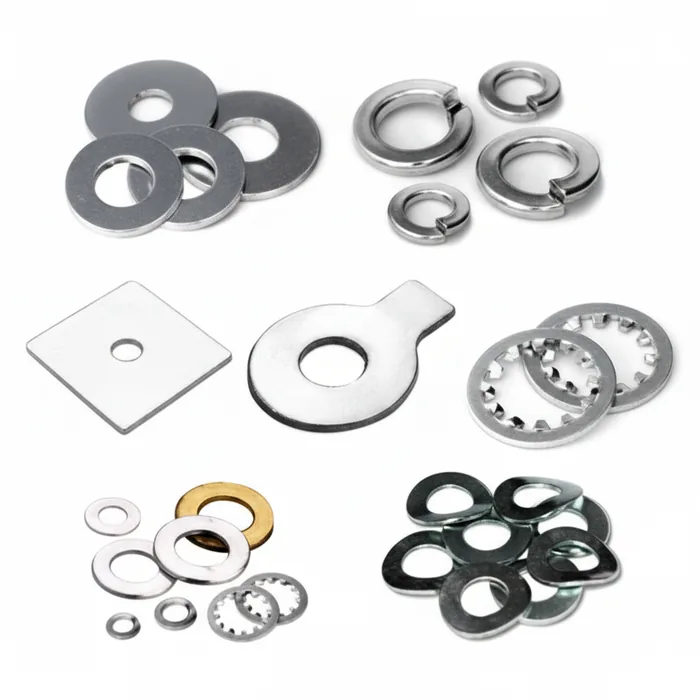
Washers (DIN 125, ISO 7089, ASME B18.2.2) distribute the load of a fastener across a wider surface and help prevent damage to the joined material - a small component that's easy to overlook in a specification but important for joint integrity.
Eye Bolts and Eye Nuts
Lifting Eye Bolts and Eye Nuts provide a rated attachment point for lifting and rigging operations, and should always be matched to the required load rating for the application.
Allen Cap Bolts and Allen CSK Bolts
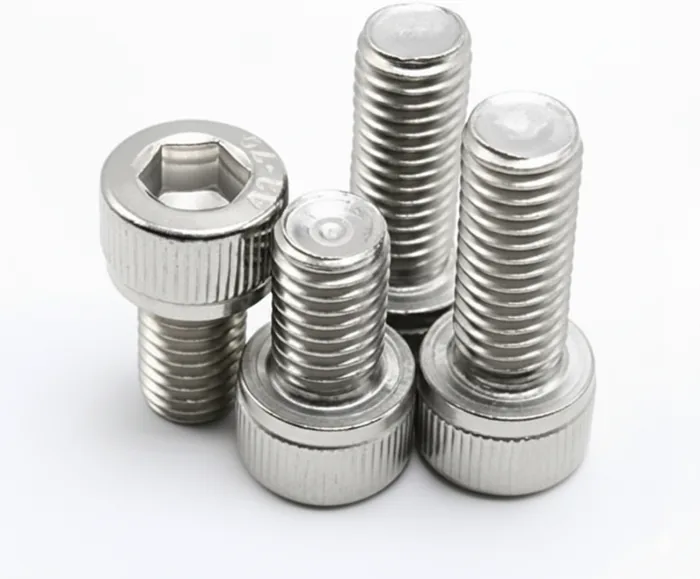
Allen Cap Bolts are precision-engineered socket head cap screws with a cylindrical head, driven with a hex key rather than a standard wrench, which allows a more compact fastening point and higher torque application in confined spaces. Allen CSK (countersunk) Bolts serve a related but distinct purpose: their countersunk head sits flush with the surrounding surface once tightened into a matching countersunk hole, which matters for applications where a protruding bolt head would interfere with a moving part or a flat finished surface.
T-Bolts and U-Bolts
T-Bolts are shaped for specialized fixture and clamping applications, commonly used with T-slot tracks in machine tables, jigs and fixtures, where the T-shaped head slides into the slot and resists rotation under load. U-Bolts serve a completely different purpose: their U-shaped body is designed to wrap around a pipe or tube and secure it to a structural member, making them a standard choice in plumbing, HVAC and structural pipe-support applications rather than general assembly work.
Carriage Bolts
Carriage Bolts feature a smooth, rounded head paired with a square neck directly beneath it. When tightened, the square neck bites into the surrounding material (commonly wood or a square-punched metal bracket) and resists rotation without needing a wrench on the head side, which is why carriage bolts are a common choice for wood-to-wood or wood-to-metal connections where only one side is accessible during installation.
Expansion Bolts and Foundation Bolts
Expansion Bolts are anchoring fasteners that mechanically expand within a pre-drilled hole as they're tightened, creating a secure hold in concrete, masonry or similar solid base materials without requiring a cast-in anchor point. Foundation Bolts serve a related but larger-scale purpose: they're specialized bolts, often cast directly into a concrete foundation before it cures, used to anchor heavy structures, machinery bases or structural steel columns to that foundation. The distinction matters for buyers: expansion bolts are typically installed after the concrete has cured, while foundation bolts are usually planned and embedded during the pour itself.
Dome Nuts and Eye Nuts
Dome Nuts have a rounded cap that fully encloses the end of the bolt thread, giving a finished, safe appearance and preventing snagging or injury from an exposed thread end - common on furniture, railings, and consumer-facing assemblies where appearance and safety both matter. Eye Nuts are ring-shaped and serve an entirely functional purpose: providing a rated attachment loop for lifting slings, hooks or cables in rigging and anchoring applications, and should always be matched to the required working load rather than selected on size alone.
Full specification table
Every fastener type GRMB EXPORTERS manufactures - with standards, size range, materials and finishes - is listed on the Industrial Fasteners page.
How to Choose Between Similar-Sounding Types
Many buyers new to fastener sourcing default to whatever type they've used before, even when a different type would suit their application better. The fastest way to narrow the choice is to start from the application rather than the fastener name: is the connection permanent or does it need to be serviced later, does one side of the joint need to be smooth or flush, is the base material metal, wood, or concrete, and will the joint see vibration or repeated load cycles. Answering these questions first usually points directly to the right fastener family before a specific standard or grade is even discussed.
Buying Mixed Fastener Orders
Many bulk orders combine several fastener types for a single assembly or project - bolts, matching nuts, and washers together, for example, or several bolt types across different parts of a structure. When ordering a mixed set, confirm that thread sizes and pitches are consistent across the bolts and nuts that need to mate with each other, and that finishes are compatible to avoid galvanic corrosion between dissimilar metals in the same joint.
Frequently Asked Questions
What's the difference between an Allen Cap Bolt and an Allen CSK Bolt?
An Allen Cap Bolt has a raised cylindrical head; an Allen CSK Bolt has a countersunk head that sits flush with the surface once installed. Choose CSK when a protruding head would interfere with a flat surface or moving part.
When should I use a U-Bolt instead of a standard bolt?
U-Bolts are designed specifically to secure round pipes or tubes to a structural member and are not a general-purpose fastener - they suit plumbing, HVAC and pipe-support applications.
Are Foundation Bolts and Expansion Bolts interchangeable?
No. Foundation Bolts are typically cast into concrete before it cures, while Expansion Bolts are installed into a pre-drilled hole in already-cured concrete or masonry. Confirm which installation method matches your project stage.
Do Eye Nuts and Lifting Eye Bolts serve the same purpose?
Both provide a rated attachment point for lifting or rigging, but always confirm the specific working load rating for your application rather than assuming interchangeability based on appearance alone.
Getting a Quote Across Multiple Fastener Types
Buyers sourcing a mixed order across several of these fastener types can request a single consolidated quotation rather than pricing each type separately - share the full list of products, sizes, materials and quantities with our export team, and we'll confirm pricing and lead time for the complete order together.